

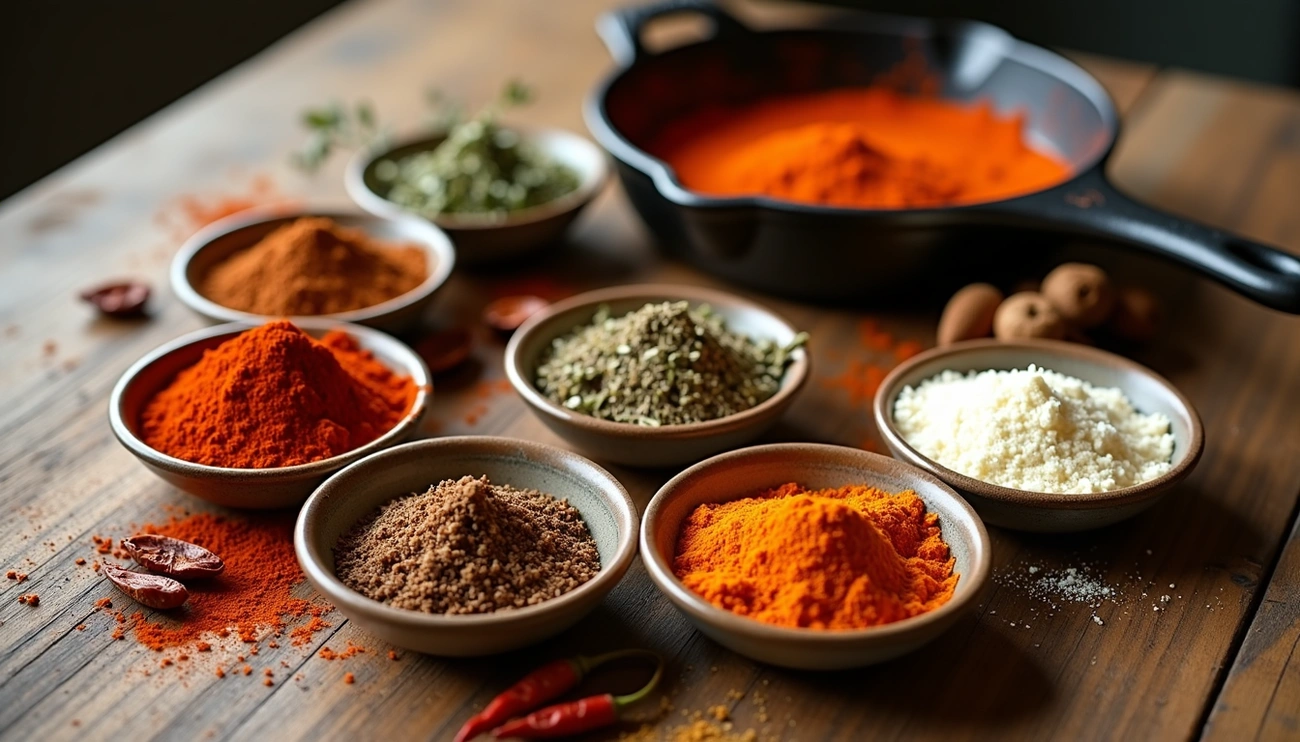
Did you know that cajun seasoning blend is a secret weapon that turns everyday dishes into bold, flavorful meals with some spicy zing?
I’ve always counted on this versatile spice mix to amp up everything from chicken to seafood, veggies to potatoes, soups to stir-frys, and even dips . Making homemade cajun seasoning is surprisingly simple, and you likely have all the ingredients in your spice drawer right now .
This delicious cajun spice recipe comes from Louisiana’s rich tradition of Cajun cuisine . Cajun seasoning’s special charm lies in its perfect blend of zesty, spicy, and savory flavors that kick any dish up a delicious notch . You can also adjust the heat level by controlling how much cayenne pepper you add .
In this piece, I’ll share my chef’s secret recipe for cajun seasoning mix, explain what’s in cajun seasoning blend, and show you how to make your own cajun seasoning that stays fresh for up to a year . Let’s spice things up!
What Is Cajun Seasoning?
Cajun seasoning blend works like magic in a bottle. This rustic seasoning mix adds punchy, herbal flavors to traditional Louisiana classics and everyday dishes. The versatile spice blend captures Cajun cooking’s heart and soul with a distinct flavor profile that perfectly balances heat, earthiness, and aromatic herbs.
Origins of Cajun cuisine
Cajun seasoning’s story starts with the Acadian people. British forces expelled these French settlers from Nova Scotia (then called Acadia) in 1755, and they later settled in southern Louisiana. These displaced Acadians – who became known as “Cajuns” – adapted their cooking to their new environment and created a unique cuisine out of necessity.
Cajun cooking emerged from humble beginnings, unlike its refined cousin Creole cuisine from New Orleans’ upper-class French settlers. The Acadians were simple farmers who blended their French cooking techniques with local ingredients from Louisiana’s swamps, bayous, and prairies. Their cuisine evolved by absorbing influences from Native American, West African, Spanish, and Caribbean cultures, creating what we now call Cajun cuisine.
How Cajun seasoning became popular
Cajun seasoning as we know it today rose to fame in the 1980s, thanks to Chef Paul Prudhomme, though Cajun cooking existed for centuries. This Louisiana native brought rural Cajun ingredients and techniques to fine dining. He created the “blackening” technique by dredging fish in spices and cooking it in a very hot cast iron skillet.
Prudhomme’s breakthroughs helped Cajun seasoning reach beyond Louisiana, though some misconceptions emerged. People started thinking Cajun food meant “so spicy you couldn’t taste the food anymore,” while authentic Cajun cooking actually balances heat with other flavors.
What’s in Cajun seasoning blend?
Recipes vary between families and commercial brands, but most Cajun seasoning blends share common ingredients. The foundation typically has:
- Paprika: Provides earthiness and a beautiful red color
- Cayenne pepper: Delivers the signature heat (adjustable to taste)
- Black and white pepper: Add complexity and brightness
- Garlic and onion powder: Contribute savory depth
- Dried herbs: Usually thyme and oregano (more prominent in Creole blends)
Cajun seasoning’s special quality lies in its versatility. This humble spice blend transforms ordinary meals into extraordinary ones with its distinctive Louisiana flair when sprinkled on proteins before cooking, added to rice dishes, or used to spice up vegetables.
Essential Ingredients for a Cajun Seasoning Mix
A perfect cajun seasoning blend comes from getting the right balance of spices that creates that distinctive Louisiana flavor. The secret lies in choosing quality ingredients and mixing them just right.
Core spices used in most recipes
Every good cajun seasoning mix needs these basic spices:
- Paprika forms the foundation of almost every cajun seasoning recipe. Most cooks prefer smoked paprika because it adds an earthy depth, though sweet paprika works great if you want less smoke flavor [1].
- Cayenne pepper brings that signature heat – you can make your blend as mild or spicy as you like [1].
- Garlic powder (not garlic salt) adds a rich savory warmth with deep umami notes [1].
- Black pepper shows up in just about every authentic cajun seasoning out there [1].
- Onion powder brings a subtle sweetness that balances out the heat [1].
Optional herbs and flavor boosters
Your cajun seasoning can taste even better with some extra herbs and spices:
Dried thyme and oregano are top choices that add earthy aromatics and lift the overall flavor profile [1]. White pepper appears in many traditional recipes and offers a different kind of heat than cayenne’s sharp kick [2]. Celery seed helps recreate the “holy trinity” base of Cajun cooking (onions, bell peppers, and celery) [2].
Many cajun cooks have their own secret touches – maybe even a bit of brown sugar for sweetness or dried mustard powder for extra depth [1]. Some versions include cumin to add an earthy warmth [3].
Salted vs. salt-free versions
Store-bought cajun seasoning can pack over 1,000mg of sodium in just one teaspoon [1]. Making your own mix lets you control the salt content completely.
Salt-free versions give you authentic flavor without health worries [4]. These blends are great because you can add salt based on what each dish needs instead of dealing with pre-set amounts [1]. This makes homemade seasoning especially valuable when you have to watch your sodium intake [5].
How to Make Your Own Cajun Seasoning
You can make your own cajun seasoning blend at home in less than 5 minutes. The flavor is nowhere near what you get from store-bought versions [6]. The process needs simple kitchen tools that you probably have in your kitchen already.
Step-by-step mixing instructions
Start by measuring all ingredients with precision and level off your spoons to maintain consistency [1]. Mix everything in a small bowl and stir really well with a spoon or small whisk until the color looks uniform [1]. A fine mesh strainer helps prevent clumps, which is especially useful for paprika [1]. The final step is to transfer your blend to an airtight container [7].
Tips for adjusting spice levels
Cayenne pepper controls the heat level in your blend [8]. A mild version needs just ½ teaspoon of cayenne to keep sensitive palates happy [9]. Medium heat that balances well with other flavors requires 1 to 1½ teaspoons [8]. Spice lovers can kick it up to 2 teaspoons or more [8]. Note that you can always add more heat later, but toning it down is impossible once mixed!
Using a spice grinder vs. mixing by hand
A spice grinder offers the most important advantages when working with dried herbs like oregano and thyme [1]. The grinding action releases more flavor and creates an even texture in your cajun seasoning [1]. Notwithstanding that, hand mixing works just fine without specialized equipment [10]. Your homemade blend will stay fresh for 6-12 months in airtight containers stored away from heat and light, regardless of your mixing method [1].
Creative Ways to Use Cajun Seasoning
The magic of Cajun seasoning comes alive as you start playing with it in your kitchen. Yes, it is amazing how many dishes you can create once you have your blend ready!
Best proteins to season
Cajun seasoning pairs perfectly with almost any protein. Chicken breasts and thighs develop rich flavors with a light coating [7]. Fish, shrimp, and shellfish taste amazing with this spice blend – great news for seafood fans [7]. Pork, steak, and even tofu soak up these flavors perfectly [7].
Vegetables and side dishes
Regular vegetables become spectacular sides when you toss them in oil and Cajun seasoning before roasting [11]. Potatoes taste incredible whether you bake, roast, or fry them [7]. Broccoli, cauliflower, corn, and bell peppers really come alive with this seasoning [12].
Pasta, soups, and dips
A spoonful of your homemade blend can turn regular alfredo sauce into something special [13]. Soups, especially tomato-based or bean varieties, taste better with a tablespoon or two [11]. This seasoning adds a kick to everything from hummus to queso, spinach artichoke dip, and guacamole [7]!
Making Cajun marinades and rubs
Mix 1 tablespoon Cajun seasoning with ¼ cup olive oil, ¼ cup lemon juice, 1 teaspoon minced garlic, and 1 teaspoon honey for a simple marinade [14]. This mix works great with chicken, steak, shrimp, and vegetables.
Conclusion
Homemade Cajun seasoning opens up endless possibilities in your kitchen. In this piece, we’ve looked at this Louisiana staple’s rich history, from its modest Acadian roots to its surge in popularity during the 1980s.
Your own Cajun seasoning blend is remarkably simple to make. You’ll need just a few basic spices – paprika, cayenne, garlic powder, and black pepper. This versatile mix can turn ordinary dishes into something special. On top of that, it lets you control the heat and salt levels – a clear advantage over store-bought options.
The best Cajun seasoning doesn’t have to set your mouth on fire. It’s all about finding that sweet spot between heat and savory depth. This balance lets your food’s natural flavors shine while adding that distinct Louisiana touch.
Give your homemade blend a try on different foods. It works wonders with chicken, seafood, vegetables, and dips. This simple spice mix might just become your kitchen’s secret weapon, just as it has become mine.
The recipe here is just the beginning. You can adjust the amounts to match your priorities. Keep your blend in an airtight container, and you’ll have fresh, zesty Cajun seasoning ready whenever you need it – a five-minute task that rewards you with bold flavors for up to a year!
Key Takeaways
Master the art of homemade Cajun seasoning to transform ordinary meals into bold, flavorful dishes with authentic Louisiana flair.
• Make it in 5 minutes: Combine paprika, cayenne, garlic powder, black pepper, and onion powder for fresh seasoning that lasts 6-12 months.
• Control your heat level: Adjust cayenne from ½ teaspoon (mild) to 2+ teaspoons (extra spicy) to match your taste preferences perfectly.
• Skip the sodium overload: Homemade blends let you control salt content, unlike store-bought versions with 1,000mg+ sodium per teaspoon.
• Use it everywhere: Season proteins, roasted vegetables, pasta sauces, soups, dips, and create marinades for maximum versatility.
• Store properly for freshness: Keep in airtight containers away from heat and light to maintain peak flavor for up to one year.
The secret to great Cajun seasoning isn’t just heat—it’s the perfect balance of spicy, savory, and aromatic flavors that enhance rather than overpower your dishes. Start with this foundation recipe, then adjust to create your signature blend.
FAQs
Q1. What are the key ingredients in a Cajun seasoning blend? A typical Cajun seasoning blend includes paprika, cayenne pepper, garlic powder, black pepper, and onion powder. Optional ingredients may include dried herbs like thyme and oregano, as well as white pepper and celery seed.
Q2. How can I adjust the heat level of my homemade Cajun seasoning? You can control the spiciness by adjusting the amount of cayenne pepper. For a mild blend, use 1/2 teaspoon of cayenne. For medium heat, use 1 to 1 1/2 teaspoons. For an extra spicy version, increase to 2 teaspoons or more.
Q3. Is it better to buy Cajun seasoning or make it at home? Making Cajun seasoning at home is often preferable as it allows you to control the ingredients, adjust the flavors to your liking, and avoid excessive sodium often found in store-bought versions. Homemade blends also tend to be fresher and more flavorful.
Q4. How long does homemade Cajun seasoning last? When stored properly in an airtight container away from heat and light, homemade Cajun seasoning can stay fresh for 6 to 12 months. This makes it a convenient and long-lasting addition to your spice collection.
Q5. What are some creative ways to use Cajun seasoning beyond traditional dishes? Cajun seasoning is versatile and can be used in many ways. Try it on roasted vegetables, mixed into pasta sauces, sprinkled on popcorn, added to dips like hummus or guacamole, or used as a rub for grilled meats and plant-based proteins.
References
[1] – https://www.beststopinscott.com/how-to-make-cajun-seasoning/
[2] – https://www.passmesometasty.com/cajun-seasoning/
[3] – https://www.allrecipes.com/recipe/149221/cajun-spice-mix/
[4] – https://veryveganish.com/evelyns-cajun-seasoning-no-salt-no-cayenne/
[5] – https://www.food.com/recipe/salt-free-cajun-seasoning-81383
[6] – https://rawspicebar.com/blogs/spices-101/how-to-blend-your-own-spice-mixes-at-home?srsltid=AfmBOopkdwDt9nTRQ4HWUAzD669DzZ-zCKUGurfI1VA8EPExYiWv-KNR
[7] – https://www.gimmesomeoven.com/cajun-seasoning/
[8] – https://rawspicebar.com/blogs/spices-101/spice-things-up-cajun-style-hold-the-salt?srsltid=AfmBOooqth3bMwB18hS5e2mJ7Q0H72sulAf2V4B1MxAvrF5uD8r89Zoo
[9] – https://www.laurafuentes.com/cajun-seasoning/
[10] – https://www.culinaryhill.com/homemade-cajun-seasoning/
[11] – https://spicestationsilverlake.com/five-creative-ways-to-use-cajun-spice/?srsltid=AfmBOooNjMwqAsoG1U5wV0pZlRCOBIuLLsjHBKXNOMU-GpcrvneFYpWk
[12] – https://www.butterbeready.com/creole-cajun-seasoning/
[13] – https://www.thekitchn.com/one-pot-cajun-pasta-recipe-23700370
[14] – https://mommypotamus.com/cajun-seasoning-recipe/