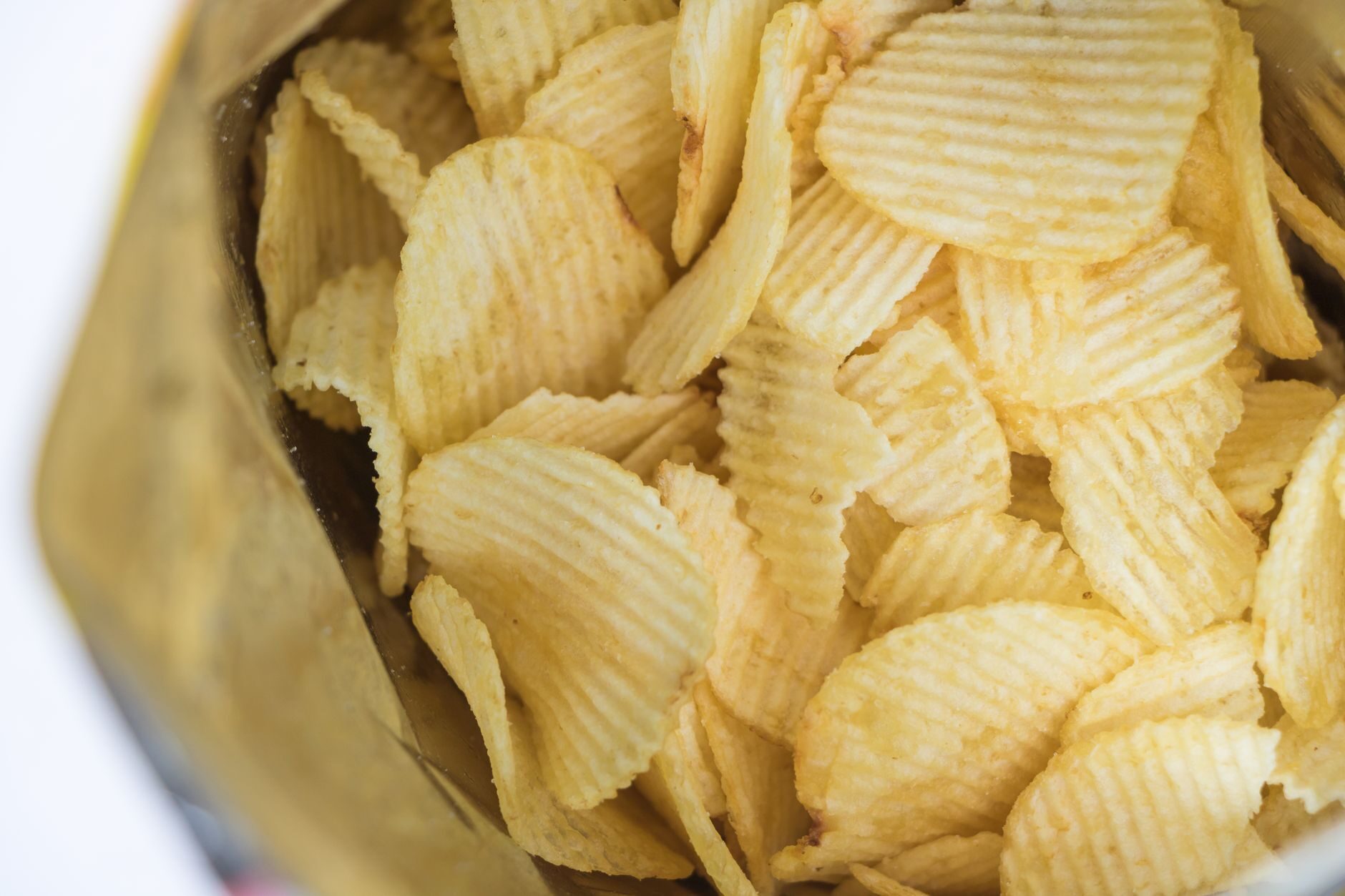
Voodoo chips are thick-cut, kettle-cooked potato chips dusted with a bold Cajun-Creole seasoning blend — a spicy-sweet mix built for Louisiana palates. For a business, they sell fast at checkout counters, boudin shops, gas stations, and delis because they pair naturally with regional foods. Below is the complete guide to what voodoo chips are, how they are made, what they cost wholesale, and how a Louisiana business should stock and market them.
What are voodoo chips exactly?
Voodoo chips are kettle-cooked potato chips finished with a seasoning that layers heat, sweetness, and savory notes — usually a combination of cayenne, paprika, garlic, onion, and a touch of sugar. The “voodoo” name references the spicy-sweet complexity: it hits several taste directions at once, the way New Orleans and Acadiana cooking does. Unlike standard chips fried on a continuous line, kettle-cooked chips are batch-cooked, which produces a harder crunch and a heartier texture that holds up next to rich foods.
The flavor category has grown well beyond one brand. You will find voodoo-style chips from national kettle-chip makers and from regional Louisiana producers, and many Cajun food retailers now carry their own house or private-label version. Because the seasoning is the differentiator, quality varies widely — the best versions use real spices rather than generic “barbecue” powder. For a Louisiana business, that authenticity is the selling point.
Why do voodoo chips matter for a Louisiana business?
Voodoo chips matter because they are a high-margin impulse buy that reinforces a store’s Cajun identity. A customer buying boudin, cracklins, or a plate lunch is already primed for bold Louisiana flavor, and a rack of voodoo chips at the register converts on that impulse. Snack sides carry strong margins and near-zero prep, which is exactly what a busy specialty market wants.
They also travel and ship well. A sealed bag of kettle chips survives national shipping far better than most prepared foods, so they belong in any online Cajun gift box or care package. For businesses building an e-commerce catalog, voodoo chips are a low-risk add-on that raises average order value.
Finally, they signal regional authenticity. A tourist stopping off I-10 near Scott or Lafayette expects Louisiana products, and a Cajun-seasoned chip fits that expectation better than a national snack brand. Placement matters: near boudin cases, plate-lunch counters, and checkout lines is where these move.
How are voodoo chips made?
Voodoo chips are made by slicing whole potatoes thick, batch-frying them in a kettle at a controlled temperature, then tumbling them with Cajun seasoning while still warm so the spices adhere. The kettle method is the key structural difference from ordinary chips.
The core steps
- Slicing: Potatoes are cut thicker than standard chips (roughly 0.06–0.08 inches) for a sturdier crunch.
- Batch frying: Small batches cook in a kettle, causing temperature swings that create the hard, curled, uneven texture kettle chips are known for. The kettle-cooking method traps more starch and gives a denser bite.
- Seasoning: Warm chips are tumbled with the spice blend so it sticks evenly.
- Packaging: Chips are nitrogen-flushed and sealed to protect crunch and shelf life during shipping.
Small regional producers may hand-batch, while larger suppliers automate the kettle line. Either way, the seasoning recipe — the balance of cayenne heat against sugar and paprika — defines the final product.
How much do voodoo chips cost wholesale?
Wholesale voodoo chips typically run $1.00 to $2.25 per single-serve bag and $2.50 to $4.50 per larger retail bag, depending on volume, seasoning quality, and whether they are private-labeled. Case pricing usually beats per-bag pricing once you order full cases.
Typical price tiers
- Single-serve (1–2 oz): $1.00–$1.75 wholesale, retailing at $1.99–$2.99.
- Retail bag (5–8 oz): $2.50–$4.50 wholesale, retailing at $4.99–$6.99.
- Private-label runs: Higher minimums but the strongest margins and brand control.
Margins on snack sides commonly land in the 35–50% range, which is why they earn their shelf space. For a business, the math is straightforward: a chip that costs $1.25 and sells at $2.99 at a high-traffic register outperforms most low-margin staples. If you plan to ship them nationally, factor in that lightweight bags add order value without adding much shipping weight.
What is the difference between voodoo chips and regular Cajun chips?
The difference is the seasoning profile: voodoo chips lean spicy-sweet and layered, while generic “Cajun” chips are usually just spicy. Voodoo blends add sugar and often a smoky or savory note, producing a more complex flavor that rounds out the heat rather than just delivering it.
Texture is the second difference. True voodoo chips are almost always kettle-cooked and thick-cut, giving that hard, satisfying crunch. Some products labeled “Cajun” are thin, continuous-fried chips with seasoning dusted on — cheaper, but they lack the substance that pairs with hearty Louisiana food.
Authenticity is the third. According to Louisiana’s Cajun and Creole culinary tradition, regional flavor is built on layered seasoning, not raw heat. A well-made voodoo chip reflects that. When a business sources chips, tasting for balance — heat that finishes, not just burns — is the quickest quality check. That balance is what separates a chip customers rebuy from a novelty they try once.
Why do competitors rank for voodoo chips and what does an authentic Cajun market do better?
Competitors rank for voodoo chips because they build product-category pages with clear titles, deep descriptions, and internal links to their shop — structure Google rewards. Many of them, though, treat the chip as a generic snack listing without explaining the flavor, sourcing, or Louisiana context that shoppers and AI assistants actually want.
An authentic Cajun market does it better in three ways. First, context: pairing chips with boudin, cracklins, and plate lunches so the product sits inside a real Louisiana food story rather than a bare catalog entry. Second, sourcing credibility: a market rooted in Acadiana can speak to regional seasoning traditions honestly, which national resellers cannot. Third, the full basket: customers buying voodoo chips are usually buying other Cajun items, and a market that ships boudin and sausage nationwide turns a single chip sale into a complete order. You can see this integrated approach in the Best Stop online shop, where snack sides sit alongside the specialty meats they were made to accompany. Depth plus authenticity beats a thin listing every time.
Where should a business display and stock voodoo chips?
A business should stock voodoo chips at the checkout counter, beside the boudin and hot-food case, and inside any Cajun gift or care package for e-commerce. Placement drives most of the sales because these are impulse and pairing purchases, not planned ones.
High-conversion placements
- Register racks: The last-second grab. Keep single-serve bags here.
- Beside prepared foods: Next to boudin, cracklins, and plate lunches, where the pairing is obvious.
- Gift boxes and shipping kits: Add a bag to boudin or sausage shipments to raise order value.
- Endcaps near the entrance: Catches tourists looking for a Louisiana snack to take on the road.
Rotate stock so nothing goes stale — kettle chips have a solid shelf life, but crunch is the product, and a soft chip loses repeat buyers. Pair chip displays with signage that names the Louisiana connection. For businesses shipping nationally, list chips as an add-on at checkout rather than a standalone product to capture the pairing behavior automatically.
How do you sell voodoo chips online and ship them nationwide?
You sell voodoo chips online by listing them as both a standalone product and a cart add-on, then shipping them in protective packaging that preserves crunch. Because chips are light and shelf-stable, they are one of the easiest Cajun products to ship nationwide.
Practical steps
- List them two ways: As their own catalog item for search traffic, and as a suggested add-on at checkout for order-value lift.
- Bundle: Include a bag in boudin and sausage gift boxes so shipping costs are shared across a larger order.
- Protect the crunch: Ship in rigid boxes with cushioning; the USDA’s food shipping guidance applies most to perishables, but crush protection still matters for chips.
- Describe the flavor: Write product copy that explains the spicy-sweet profile and its Louisiana roots, because online shoppers cannot taste before buying.
Strong photography and honest flavor descriptions convert. When customers understand exactly what voodoo chips are and why they belong in a Cajun order, they add them without hesitation — and they come back.